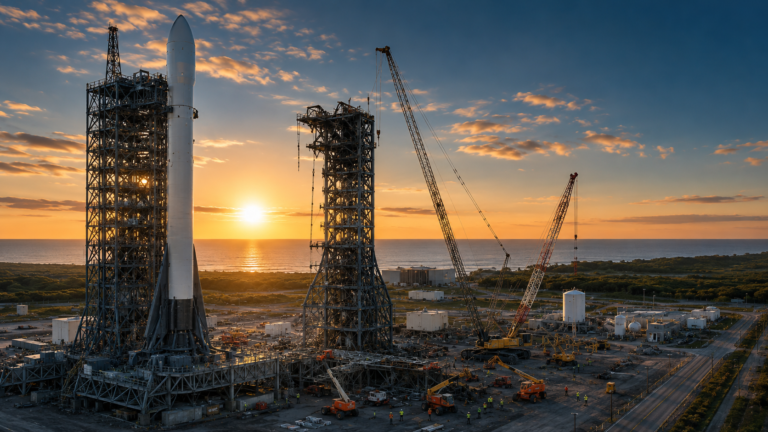
Digital infrastructure investors, technology companies and energy developers are increasingly combining data centers with dedicated power generation as artificial intelligence places unprecedented pressure on electricity networks.
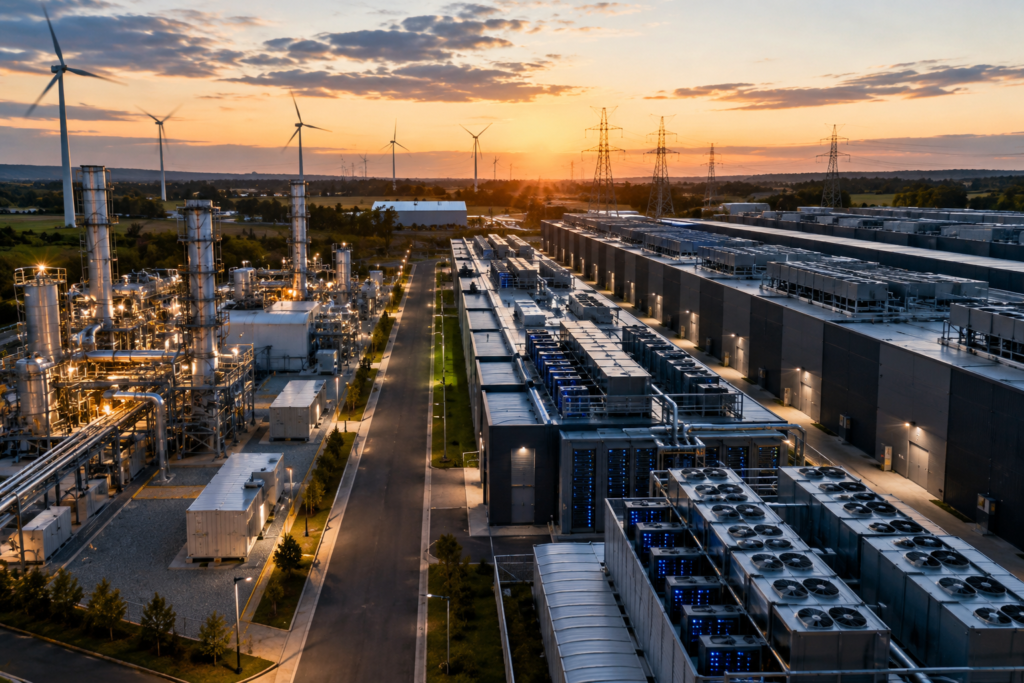
The artificial intelligence investment cycle is moving beyond chips, models and data centers.
Electricity has become one of its most important strategic constraints.
As technology companies accelerate the construction of AI computing facilities, access to reliable power is increasingly determining where projects can be built, how quickly they can begin operating and whether their long-term economics remain attractive.
This shift is changing the relationship between digital infrastructure and the energy industry.
Data center owners and infrastructure investors are no longer treating power solely as a utility service purchased after a site has been selected. They are acquiring energy developers, signing long-term supply agreements and building dedicated generation assets alongside computing facilities.
The result is the emergence of a more integrated investment model connecting land, electricity generation, grid infrastructure, data center buildings, cooling systems and computing equipment.
DigitalBridge moves deeper into energy infrastructure
A recent example is DigitalBridge’s planned acquisition of power infrastructure developer ArcLight Capital for approximately $1.1 billion.
DigitalBridge develops and invests in data centers, telecommunications infrastructure and other digital assets. ArcLight develops and acquires energy assets spanning natural gas, solar power, wind generation and battery storage.
The transaction reflects a broader view that future digital infrastructure platforms may need direct capabilities across both computing and energy.
According to recent estimates cited by Reuters, electricity demand from U.S. data centers could rise from approximately 31 gigawatts in 2025 to 66 gigawatts in 2027. [1]
This would represent an unusually rapid increase in demand for an electricity system that already faces long connection queues, equipment shortages and delays in building new transmission infrastructure.
For data center developers, waiting several years for a conventional grid connection may no longer be commercially acceptable.
AI processors can become outdated quickly. A data center that is delayed for several years may open with less competitive equipment or miss a period of strong customer demand.
Owning or partnering directly with a power developer can help investors address these risks earlier in the development process.
Power has become part of the data center asset
Historically, a data center investment could be analysed primarily through land, construction cost, tenant demand, lease duration and network connectivity.
That framework is changing.
A modern AI campus may require several hundred megawatts of continuous electricity. The largest planned developments may require power measured in gigawatts.
This means that the economic value of a data center site increasingly depends on several additional factors:
- Available grid capacity
- Speed of interconnection
- Access to gas, renewable or nuclear generation
- Transmission infrastructure
- Backup and emergency power
- Cooling requirements
- Water availability
- Long-term electricity pricing
- Local regulatory approval
A parcel of industrial land with confirmed power access may therefore be substantially more valuable than a similar site without an achievable path to electricity.
This has created growing interest in what the market sometimes describes as “powered land”: sites where energy access, grid connections or generation plans have already been secured.
For private-market investors, power availability is becoming part of the underlying real estate and infrastructure investment thesis rather than a secondary operating consideration.
Microsoft and Chevron develop a dedicated power model
The convergence between technology and energy is also visible in the agreement between Microsoft and Chevron to develop a co-located data center and natural-gas power facility in West Texas.
The project, known as Kilby, is designed to provide dedicated electricity to Microsoft’s data center campus in Pecos under a 20-year arrangement.
The campus is expected to add approximately two gigawatts of data center capacity, while the power project could eventually reach 2.67 gigawatts. Initial power delivery is targeted for 2028, subject to investment approval and project execution. [2]
The project illustrates the appeal of co-location.
Instead of generating electricity at a distant power plant and transporting it through an already constrained grid, the generation facility can be located near the data center.
This may reduce dependence on transmission capacity and provide greater certainty over when electricity will become available.
The approach also creates potential advantages for energy companies.
AI data centers may become large, long-duration customers capable of supporting investments in new generation capacity through contracted revenue.
For Microsoft, a long-term arrangement may provide greater visibility over electricity supply for infrastructure supporting services such as Copilot and other AI products.
Technology companies are securing the power supply chain
DigitalBridge and Microsoft are not isolated examples.
Google previously agreed to acquire renewable energy developer Intersect for approximately $4.75 billion as part of a strategy involving co-located data centers, renewable generation and battery storage. [1]
These transactions suggest that technology and infrastructure groups increasingly want greater control over the development process.
A conventional project can involve several disconnected parties:
- A landowner
- A real estate developer
- A data center operator
- A utility company
- A power generator
- A transmission provider
- A cloud customer
- Equipment and cooling suppliers
- Institutional lenders and equity investors
Each dependency can delay the project.
An integrated platform may be able to coordinate land, power, construction and customer demand more efficiently.
However, integration also introduces additional complexity.
A digital infrastructure investor that acquires a power developer must understand energy markets, environmental rules, fuel supply, grid regulation and commodity-price exposure.
Similarly, an energy company entering the data center market must understand technology cycles, tenant credit, construction risk and rapidly changing computing requirements.
Private capital may fund the next stage
The scale of the planned AI expansion is likely to require multiple sources of capital.
Goldman Sachs has estimated that combined capital expenditure by Meta, Microsoft, Amazon and Alphabet could reach approximately $5.3 trillion between fiscal years 2025 and 2030.
The firm expects the companies and their partners to use public markets, securitised financing and private capital to meet those requirements. It also expects private infrastructure and real estate investors to play a larger role as data center projects increasingly combine land, buildings, equipment and power. [3]
This creates several possible private-market financing opportunities.
Infrastructure equity
Long-term investors may provide equity for data centers, transmission assets, renewable projects, battery storage and dedicated generation facilities.
Private credit
Private lenders may finance construction, equipment purchases, bridge facilities and projects that do not yet meet the requirements of public bond markets.
Real estate capital
Data center campuses require industrial land, specialised buildings and long-term development expertise.
Structured capital
Projects may use preferred equity, joint ventures, asset-backed structures and contractual revenue arrangements to balance risk among developers, tenants and investors.
Energy-transition investment
Renewable generation, storage, grid modernisation and energy-efficiency systems may be developed alongside AI infrastructure.
The boundaries between real estate, energy and digital infrastructure are consequently becoming less distinct.
Electricity demand is growing faster than the grid
The attraction of direct power ownership is partly a response to the speed at which AI demand is developing.
Electricity systems are generally designed and expanded over long periods.
Transmission lines, substations and large power plants can require years of planning, permitting and construction.
AI data centers can move from announcement to proposed construction much more quickly.
This creates a timing mismatch.
Technology companies may be ready to purchase processors and begin construction, while utilities may not have sufficient capacity to connect the project.
Equipment shortages can make the problem more severe. Transformers, turbines, switchgear and other grid components may require long delivery times.
Skilled labour is another constraint. Power-sector development requires engineers, electricians, line workers and specialised construction teams.
For investors, a project with strong tenant demand can still fail to meet its timetable if electricity is not available.
The quality of the power strategy is therefore becoming as important as the quality of the building or the creditworthiness of the customer.
Off-grid generation creates new risks
Some developers are responding to grid delays by building power plants that operate outside the conventional public electricity network and serve a specific data center.
Reuters identified at least 57 off-grid U.S. power projects proposed or under construction for individual data centers, representing approximately 73 gigawatts of capacity. Many of these projects rely on natural gas. [4]
Dedicated generation may allow projects to begin operating more quickly and reduce pressure on electricity customers who might otherwise share the cost of grid expansion.
It also raises significant questions.
Local communities may be concerned about air pollution, noise, water consumption and the speed of permitting.
Natural-gas plants emit greenhouse gases and local air pollutants.
Projects developed with limited public consultation may face legal, political or reputational challenges.
A power solution that accelerates construction may therefore create other forms of risk.
Investors must consider not only whether electricity can be delivered, but whether the project can maintain community support and comply with changing environmental standards.
AI is physical infrastructure
The public discussion around artificial intelligence often focuses on software.
In reality, AI systems depend on a large physical supply chain.
This includes:
- Semiconductor fabrication plants
- High-bandwidth memory
- Server manufacturing
- Fibre and optical networking
- Data center buildings
- Electricity generation
- Transmission networks
- Cooling equipment
- Water systems
- Batteries and backup power
- Industrial land
United Nations researchers estimate that global data center electricity consumption could approximately double to 945 terawatt-hours by 2030.
They also project significant increases in water use, carbon emissions and land requirements as AI capacity expands. [5]
These projections reinforce the view that AI investment cannot be evaluated solely through software revenue or processor demand.
Its long-term expansion depends on whether countries and companies can build the supporting infrastructure responsibly and economically.
Regulation is likely to become more important
Governments are beginning to respond to the energy implications of data center growth.
The European Union has announced plans to develop minimum energy-efficiency standards for new and existing data centers.
EU data center capacity is expected to rise from approximately 12 gigawatts in 2025 to 28 gigawatts by 2030, increasing pressure on electricity systems and clean-energy targets. [6]
Future regulation may address:
- Energy efficiency
- Water consumption
- Carbon intensity
- Waste heat recovery
- Public reporting
- Grid contribution
- Clean-energy procurement
- Emergency power systems
For infrastructure investors, higher standards may increase development costs.
They may also benefit efficient facilities and well-located projects that can meet regulatory requirements more easily than older or less efficient competitors.
Potential investment opportunities
The convergence of AI and electricity could create opportunities across several segments.
Power development platforms
Energy developers with projects, grid connections and experienced teams may become acquisition targets for data center and digital infrastructure investors.
Grid equipment
Demand may increase for transformers, switchgear, cables, substations and power-management systems.
Energy storage
Battery systems can help manage fluctuating renewable generation and provide backup capacity.
Cooling and efficiency
Advanced cooling systems may reduce electricity and water requirements for high-density computing.
Gas and turbine infrastructure
Some data centers may use dedicated gas generation where grid connections or renewable capacity are insufficient.
Renewable energy
Solar and wind projects may support long-term power contracts and corporate decarbonisation objectives.
Nuclear power
Existing nuclear plants and future small modular reactors may attract interest because they can provide continuous low-carbon electricity, although development timetables remain uncertain.
The main risks
The investment opportunity is substantial, but the risks are equally significant.
Overbuilding
Demand forecasts may prove too optimistic, leaving some facilities without sufficient customers.
Technology changes
More efficient processors or models could reduce future electricity requirements per unit of computing.
Construction inflation
Strong demand for equipment, labour and materials may increase project costs.
Power-price exposure
Projects without long-term contracts may face volatile electricity or fuel prices.
Regulatory resistance
Communities and governments may impose stricter environmental, water or permitting requirements.
Grid uncertainty
A promised connection may be delayed or require additional investment.
Customer concentration
Many projects depend on a small number of large technology tenants.
Financing risk
Highly leveraged developments may face pressure if construction is delayed or interest rates remain elevated.
What to watch next
Several developments will show how quickly the power and data center industries are converging.
More acquisitions of energy developers
Digital infrastructure funds may continue to acquire companies with access to generation projects and grid expertise.
Longer power agreements
Technology companies may sign more contracts lasting 15 to 20 years to secure electricity and support project financing.
Expansion of co-located power
Data centers may increasingly be built alongside dedicated gas, renewable, storage or nuclear assets.
Growth in private infrastructure financing
Institutional investors may provide more capital for projects that combine real estate, energy and computing infrastructure.
New efficiency rules
Governments may require greater disclosure and stronger energy-performance standards.
Community opposition
Public resistance could become an important factor in determining which projects move forward.
AI’s next bottleneck is not only computing
The AI infrastructure race is often presented as a competition for the most advanced chips.
Chips remain essential, but they cannot operate without buildings, cooling systems and dependable electricity.
The companies capable of coordinating these elements may gain an important advantage.
This helps explain why data center investors are acquiring power developers and why energy companies are building directly for technology customers.
The next stage of AI expansion may not be led only by software engineers and semiconductor designers.
It may also be shaped by infrastructure funds, utilities, power developers, real estate investors and private lenders.
For investors, the central question is no longer simply how much demand AI will create.
It is whether the physical infrastructure required to serve that demand can be financed, permitted and delivered at a commercially sustainable cost.
Important Information
This article is provided for general informational and educational purposes only. It does not constitute investment advice, an offer, a solicitation or a recommendation to purchase or sell any security, fund interest or investment product.
Infrastructure and private-market investments may involve construction risk, illiquidity, leverage, regulatory uncertainty, environmental exposure and possible loss of capital.