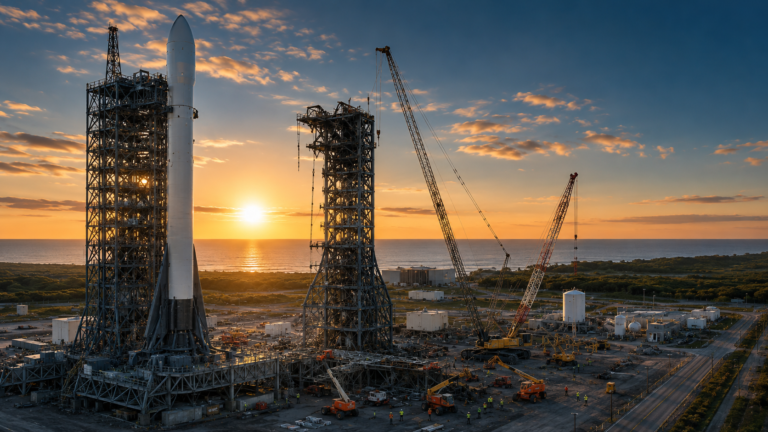
The five-part debt offering gives SpaceX long-term funding across maturities extending to 2056, highlighting how commercial space, artificial intelligence and digital infrastructure are increasingly being financed through public capital markets.
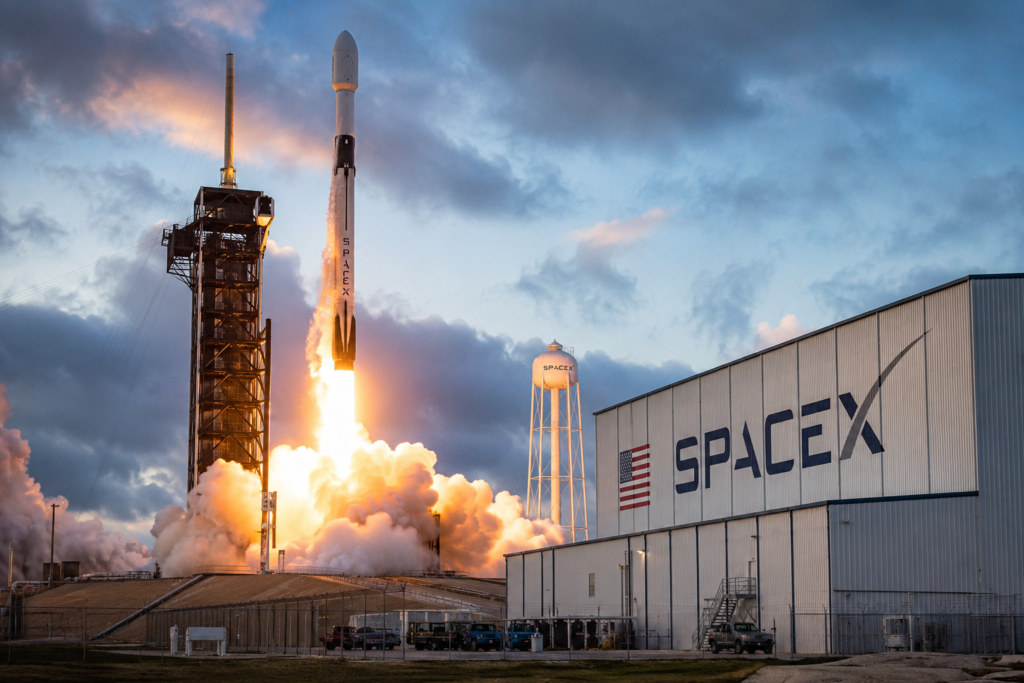
SpaceX has priced its inaugural bond issuance at a total of $25 billion, marking the company’s first major entry into the investment-grade corporate debt market following its public listing.
The offering consists of five separate tranches of senior unsecured notes, with maturities ranging from 2031 to 2056. The structure provides SpaceX with access to both medium-term and long-duration capital while spreading its future repayment obligations across several decades. [1]
The transaction includes:
- $7.0 billion of 5.350% senior notes due in 2031
- $6.0 billion of 5.650% senior notes due in 2033
- $6.0 billion of 5.875% senior notes due in 2036
- $2.5 billion of 6.600% senior notes due in 2046
- $3.5 billion of 6.650% senior notes due in 2056
The offering was expected to settle on June 26, subject to customary closing conditions. [1]
SpaceX said the proceeds would be available for general corporate purposes, repayment of borrowings under a bridge loan facility and the payment of associated fees and expenses. [2]
Beyond the size of the transaction, the bond sale offers a useful case study in how rapidly expanding technology companies finance large-scale infrastructure programmes.
SpaceX is no longer operating solely as a rocket launch company. Its activities increasingly connect commercial spaceflight, satellite communications, artificial intelligence, computing infrastructure and long-term industrial development.
Each of these areas requires substantial upfront investment before the full economic return becomes visible.
Why issue debt when substantial cash is available?
One of the most striking details surrounding the offering is SpaceX’s reported cash position.
The company disclosed approximately $100.8 billion in cash and cash equivalents as of June 19, according to reporting associated with the notes offering. By comparison, its earlier IPO filing showed $15.9 billion in cash and cash equivalents at the end of March. [3]
At first glance, raising another $25 billion through bonds may appear unnecessary for a company with such a large liquidity position.
However, companies do not generally determine financing strategy by looking at cash alone.
Several factors may explain why a highly capital-intensive company chooses debt even when it has substantial liquidity.
Preserving strategic liquidity
Cash provides flexibility during periods of market volatility, delayed projects, supply-chain disruption or unexpected acquisition opportunities.
A company pursuing several large programmes simultaneously may prefer to preserve its cash rather than commit most of it to long-term assets.
Refinancing short-term borrowing
The offering allows SpaceX to replace bridge financing with longer-term debt.
Bridge loans are usually intended to provide temporary funding before a more permanent financing arrangement is completed. Replacing that borrowing with bonds can extend maturities and create a more predictable capital structure.
Matching financing with asset duration
SpaceX is investing in projects that may operate for decades.
Satellites, launch infrastructure, data centres, energy systems and manufacturing facilities are long-lived assets. Funding part of these projects with long-term bonds may create a closer match between the useful life of the assets and the repayment schedule of the financing.
Diversifying sources of capital
A company that depends only on equity funding exposes existing shareholders to continuing dilution.
Debt gives SpaceX another source of capital and allows it to build relationships with institutional bond investors, credit analysts and fixed-income markets.
Understanding the five-tranche structure
The five-part offering is designed to appeal to investors with different duration and yield preferences.
The shorter maturities may be attractive to investors seeking exposure to SpaceX without committing capital for several decades.
The longer-dated 2046 and 2056 notes offer higher coupons but expose investors to greater interest-rate and duration risk.
This maturity ladder also prevents the entire $25 billion from becoming due at the same time.
Instead, principal repayments are distributed across:
- Five years
- Seven years
- Ten years
- Twenty years
- Thirty years
For SpaceX, this reduces refinancing concentration.
For bond investors, the structure offers several ways to gain credit exposure to the company.
The notes are senior unsecured obligations. This means they are not secured by specific rockets, satellites, facilities or other identified assets.
They rank equally in right of payment with SpaceX’s existing and future unsubordinated debt obligations. [1]
Investors are therefore relying primarily on the overall financial strength and future cash-generating capability of the company rather than on collateral tied to a specific project.
Capital requirements extend beyond rockets
SpaceX’s business model is becoming broader and more infrastructure intensive.
The company continues to invest in launch systems and spacecraft, but its capital requirements increasingly include several interconnected areas.
Starship development
Starship is intended to support larger payloads, deep-space missions, lunar programmes and potentially future Mars-related activity.
Developing a fully reusable launch system requires repeated testing, specialised manufacturing, launch facilities and extensive engineering resources.
Starlink expansion
Starlink requires the continuing manufacture, launch and replacement of satellites.
Its future development may also involve direct-to-device communications, expanded spectrum use, ground infrastructure and additional customer-service capabilities.
Computing and AI infrastructure
Recent disclosures and reports indicate that SpaceX is becoming more involved in computing capacity and AI-related infrastructure.
These projects can require large quantities of processors, advanced networking, data-centre facilities, power capacity and cooling systems.
Manufacturing capacity
Vertical integration has been an important part of SpaceX’s operating model.
Expanding satellite, launch vehicle and computing-related production may require additional factories, equipment, supply agreements and skilled employees.
The financial demands of these programmes help explain why access to both equity and debt markets may be strategically valuable.
What the bond sale says about SpaceX’s development
Entering the corporate bond market represents an important stage in the evolution of SpaceX.
Private companies commonly depend on venture capital, private placements, founder funding and bank facilities.
Large public companies can access a wider range of financing sources, including:
- Public equity
- Investment-grade bonds
- Commercial bank facilities
- Convertible securities
- Asset-backed financing
- Project-level financing
- Strategic partnerships
The ability to raise $25 billion in a first bond transaction suggests that SpaceX can attract significant institutional demand.
It also places the company under a different form of market discipline.
Equity investors may focus on long-term growth, innovation and valuation.
Bond investors are generally more concerned with:
- Cash flow
- Liquidity
- leverage
- Interest coverage
- Debt maturity
- Capital expenditure
- Business concentration
- Default risk
- Recovery value
As SpaceX becomes a recurring issuer, its financial policies, debt levels and liquidity management may receive greater scrutiny from credit markets.
The role of long-duration investors
The inclusion of notes due in 2046 and 2056 is particularly significant.
Thirty-year corporate bonds require investors to form a view of a company’s durability across multiple economic, technological and regulatory cycles.
Potential buyers may include:
- Insurance companies
- Pension funds
- Asset managers
- Sovereign investment institutions
- Credit funds
- Other long-duration institutional investors
These investors must consider whether SpaceX can maintain a competitive position and sufficient cash flow over an extended period.
The company operates in sectors with significant long-term potential, but these sectors also involve material uncertainty.
Launch technology may change.
Satellite networks require continual replacement and upgrading.
AI infrastructure may experience rapid technological obsolescence.
Government policies and national-security requirements may influence commercial activity.
A long-dated SpaceX bond therefore combines exposure to a recognised technology platform with the risks associated with forecasting rapidly changing industries decades into the future.
Implications for private credit and capital markets
The offering also provides several wider lessons for private-market investors.
Large technology companies need multiple financing channels
Even after raising substantial equity capital, companies pursuing large infrastructure strategies may continue to use debt.
The scale of current AI, satellite and energy-related investment is often too large for a single source of capital.
Bridge lending can create opportunities before public refinancing
Bridge facilities provide temporary capital for acquisitions, restructuring or time-sensitive transactions.
Banks and private credit providers may support a company during the period before a bond or equity offering becomes available.
Public debt markets can finance private-market expansion
The proceeds of public bond offerings may ultimately support investments in assets that resemble private-market opportunities, including manufacturing plants, data centres, energy infrastructure and long-duration technology projects.
Credit analysis is becoming more important in technology
Technology companies were previously evaluated primarily through equity-growth frameworks.
As they issue more debt to finance infrastructure, credit quality, maturity management and cash-flow resilience become increasingly important.
Why the market reaction may be mixed
A large bond offering can be interpreted in more than one way.
Supporters may view the transaction as evidence that SpaceX has access to deep pools of institutional capital and can finance long-term expansion without relying entirely on new equity.
More cautious investors may focus on the reasons the company needs additional funding so soon after its public listing.
Debt increases fixed financial obligations.
Interest payments must be made regardless of whether new projects achieve their expected returns.
Large cash balances can provide protection, but the value of that protection depends on how quickly the cash is deployed.
Market participants must therefore distinguish between financing capacity and economic return.
Raising capital is not the same as generating an attractive return on that capital.
The central question is whether the assets financed by the bonds ultimately produce sufficient cash flow to justify the cost and risk of the investment.
Key risks for bond investors
Execution risk
SpaceX is pursuing technically difficult projects with uncertain development schedules.
Testing failures, launch delays or manufacturing problems could increase costs.
Capital-expenditure risk
Large infrastructure programmes may require more funding than initially expected.
Additional borrowing could increase leverage.
Technology risk
Satellite, launch and AI technologies can change rapidly.
Assets may require replacement or upgrading sooner than expected.
Concentration risk
A significant portion of future value may depend on Starlink, launch services and a limited number of large technology programmes.
Regulatory and geopolitical risk
Space activity, telecommunications, spectrum and advanced computing are subject to significant regulatory and national-security oversight.
Interest-rate risk
Long-duration bond prices can decline substantially when market interest rates rise, even when the issuer continues to make all required payments.
Unsecured creditor risk
Because the bonds are unsecured, investors do not have a direct claim over specifically pledged SpaceX assets.
What to watch next
Several developments will determine how the bond transaction fits into SpaceX’s broader financial strategy.
Use of proceeds
Investors will watch how much of the capital is used to refinance existing borrowing and how much supports new investment.
Future debt issuance
The inaugural transaction may establish a benchmark for additional bond offerings.
Capital expenditure
Greater disclosure about launch, satellite, computing and manufacturing investment will help investors understand future funding requirements.
Cash-flow development
The ability of Starlink, launch services and other business activities to generate recurring cash flow will be central to long-term credit quality.
Credit ratings
Changes in operating performance, leverage or financial policy could influence future ratings and borrowing costs.
Integration of AI and space infrastructure
SpaceX’s development into a broader technology and infrastructure platform may create new revenue sources, but it may also increase complexity and capital intensity.
A new stage in SpaceX’s capital-market story
SpaceX’s $25 billion inaugural bond issuance is not simply another financing transaction.
It reflects the increasing financial scale of commercial space and AI infrastructure.
The company is building projects whose capital requirements extend beyond traditional aerospace development.
By combining equity, cash reserves, bank financing and long-term bonds, SpaceX is constructing a capital structure capable of supporting multiple large programmes simultaneously.
For investors, the transaction demonstrates both the opportunity and the challenge presented by modern infrastructure-led technology companies.
They may possess strong brands, valuable intellectual property and access to growing markets.
They may also require extraordinary amounts of capital before their most ambitious projects generate dependable returns.
The success of SpaceX’s bond strategy will therefore depend not only on its ability to raise money, but on how effectively that capital is deployed across the next several decades.
Important Information
This article is provided for general informational and educational purposes only. It does not constitute investment advice, an offer, a solicitation or a recommendation to purchase or sell any security, bond, fund interest or investment product.
Bond values may fluctuate, and investors may lose part or all of their invested capital. Information is based on publicly available company announcements, regulatory filings and media reports and may change as additional information becomes available.