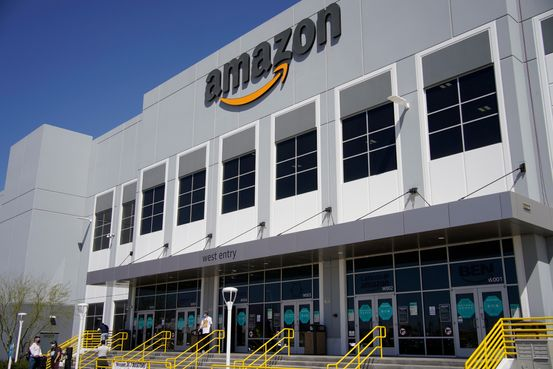
SEATTLE — Amazon crossed the $3 trillion market-capitalization threshold for the first time on August 3, joining an elite group of technology companies as investors rewarded strong earnings and accelerating demand for cloud and artificial-intelligence infrastructure.
The company’s shares rose about 5% to a record $285.01 during the milestone session and had gained more than 23% since the beginning of the year. Amazon became the fifth company to reach a $3 trillion valuation, following Apple, Microsoft, Alphabet and Nvidia.
The rally followed Amazon’s second-quarter results, which showed a 20% year-over-year increase in total net sales and a 43% rise in operating income to $27.5 billion. AWS net sales grew 37%, the division’s fastest expansion in more than four years, strengthening the argument that the global AI investment cycle is generating real demand for cloud computing, chips and data-center capacity.
AWS remains central to Amazon’s valuation because it contributes a disproportionate share of operating profit and provides infrastructure for companies building and deploying advanced AI models. Partnerships and infrastructure relationships involving major AI developers have expanded the strategic importance of the cloud division beyond its traditional enterprise-computing role.
The market reaction also highlighted growing differentiation among large technology companies. Investors are no longer treating every major AI spender in the same way. Companies that can demonstrate revenue growth, operating leverage and durable cash generation are receiving a more favorable response than businesses whose capital expenditure rises without a clear near-term return.
Amazon’s achievement carries symbolic importance because the company combines several major economic themes: consumer spending, e-commerce logistics, digital advertising, cloud infrastructure and artificial intelligence. Its valuation now reflects expectations not only for retail growth, but also for AWS to remain one of the principal platforms supporting the next generation of computing.
The milestone does not eliminate risks. Amazon is increasing capital spending to support AI and cloud demand, and the returns on that investment will depend on utilization, pricing and competition. Microsoft, Alphabet and other infrastructure providers are also expanding rapidly, creating an intense contest for customers and computing capacity.
Even so, the move above $3 trillion signals that investors currently view Amazon as one of the clearest beneficiaries of the AI infrastructure boom. The next test will be whether AWS can sustain its growth while Amazon converts record spending into durable earnings and free cash flow.