
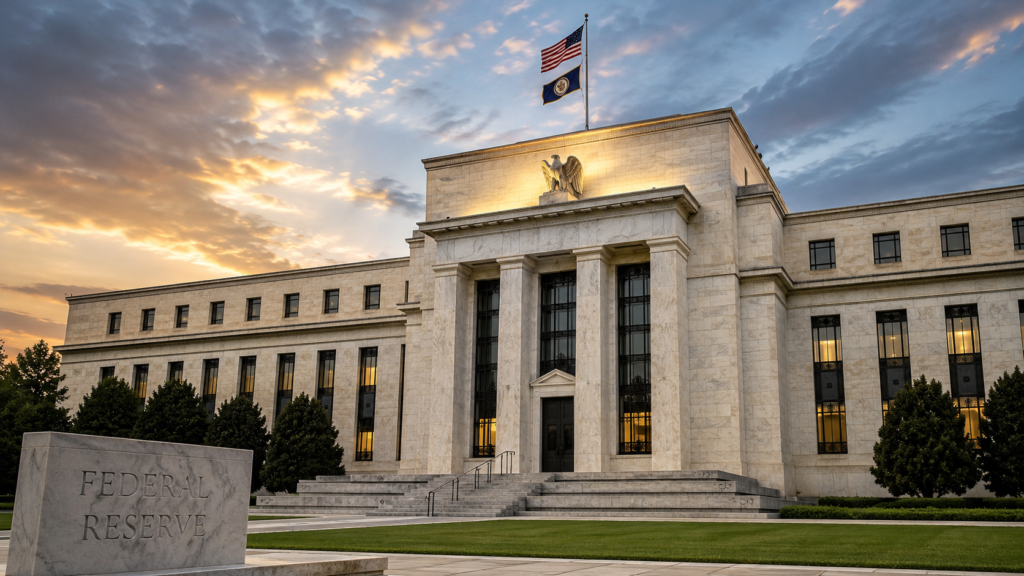
WASHINGTON — The Federal Reserve has left its benchmark interest-rate range unchanged, but the latest decision revealed a sharper internal divide over how aggressively the central bank should respond to inflation.
At its July 29 meeting, the Federal Open Market Committee voted 9-3 to maintain the federal funds target range at 3.50% to 3.75%. Beth Hammack, Neel Kashkari and Lorie Logan dissented in favor of a quarter-point increase, creating one of the clearest recent signals that a group of policymakers believes current borrowing costs may not be restrictive enough.
The central bank described economic activity as expanding at a solid pace despite elevated uncertainty linked partly to the conflict in the Middle East. It also highlighted strong productivity growth and capital investment, while noting that job gains had kept pace with labor-force growth and that unemployment had changed little.
The central challenge remains inflation. The Fed said price pressures were still above its 2% objective, with supply shocks contributing to increases in energy and other sectors. The decision to hold rates steady suggests the majority of officials preferred to assess additional data before tightening further, but the three dissents show that patience is no longer a unanimous position.
The split matters for global markets because expectations about the next Fed move influence Treasury yields, the U.S. dollar, equity valuations and financing conditions far beyond the United States. A higher-for-longer policy path would keep pressure on heavily indebted companies and rate-sensitive sectors, while renewed tightening could strengthen the dollar and raise the cost of dollar funding internationally.
For investors and businesses, the next phase of the debate will depend heavily on inflation, employment and energy-market data. A meaningful cooling in price pressures could support another pause. By contrast, continued inflation resilience or a further energy shock could strengthen the case for the quarter-point increase favored by the dissenters.
The July meeting therefore delivered two messages at once: policy remains unchanged for now, but the threshold for another rate increase may be lower than markets previously assumed. The coming data releases will determine whether the three dissenters remain a minority or become the leading edge of a broader shift inside the committee.